

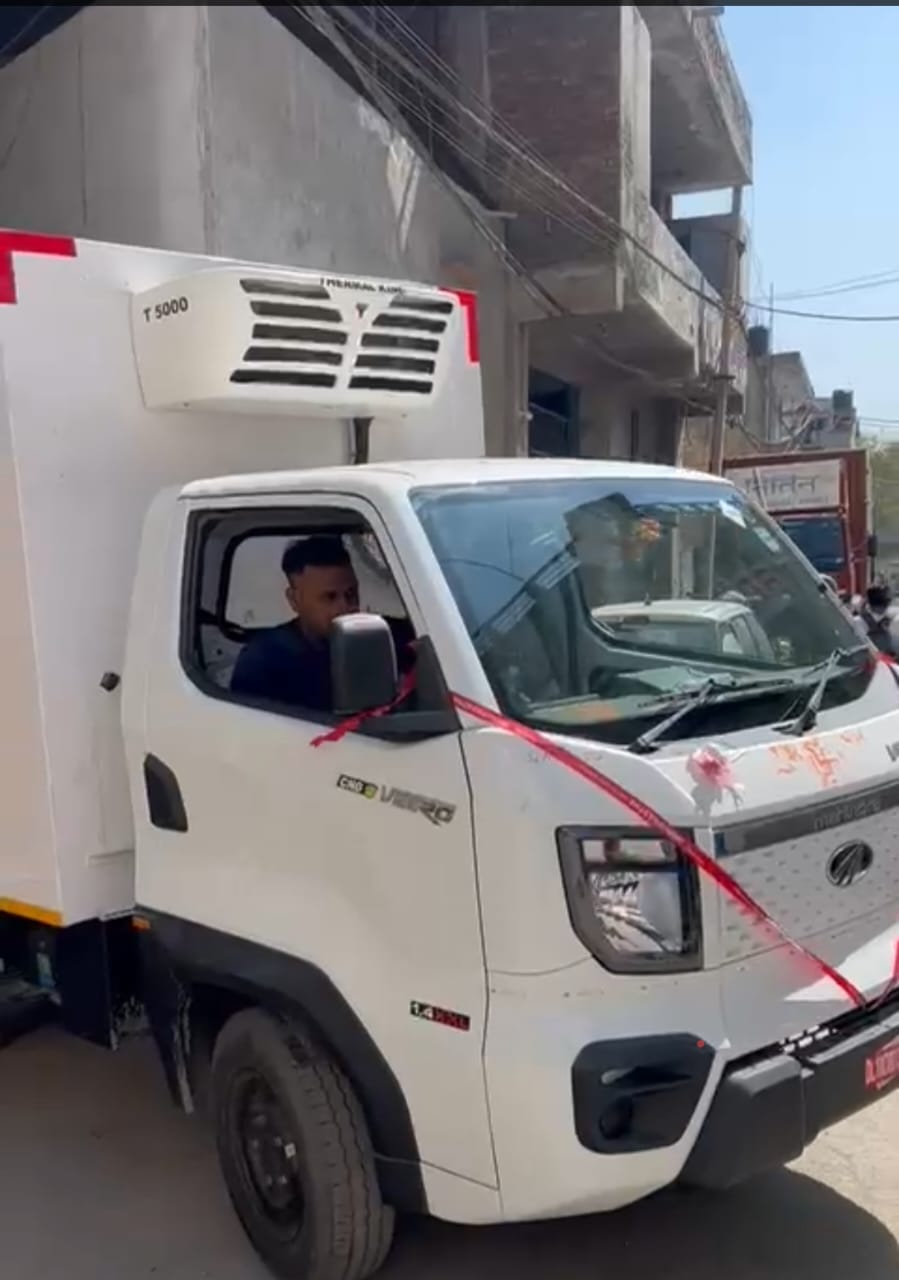
❄️ Frozen Trucks at -18°C: The Stuff No One Tells You
Everyone says:
“Keep it at -18°C.”
But frozen logistics isn’t about a number on a screen. It’s about physics most people ignore.
🔹 1. The display lies (sort of)
That -18°C you see?
It’s air temperature — not product core temperature.
Load pallets at -10°C into a truck set at -18°C and the air cools fast.
The product? It can take hours.
🔹 2. Opening the door changes everything
A truck running at -20°C is sitting against Indian ambient temperatures of 35–40°C.
Open the door and:
Warm air rushes in instantly
Pressure equalizes immediately
Evaporator load spikes
Frost formation increases
Each opening can move temperature by 2–5°C.
Now imagine 12 drops a day.
Multi-drop frozen routes are thermally violent environments.
🔹 3. Frozen trucks don’t “create” cold
They preserve it.
If the cargo wasn’t blast-frozen correctly,
no reefer unit can rescue it.
The truck is not a freezer.
It’s a temperature maintenance system.
🔹 4. The real risk isn’t breakdown. It’s drift.
The danger isn’t jumping to -5°C.
It’s this pattern:
-18 → -14 → -17 → -15 → -18
Repeated micro fluctuations quietly reduce shelf life, texture and product integrity.
Most temperature failures are invisible at delivery.
They show up weeks later.
🔹 5. Speed without buffer = instability
When routes are overscheduled with zero recovery time:
The compressor never catches up.
The system runs continuously stressed.
Stability drops.
In frozen logistics, buffer time is protection.
Cold chain below -15°C isn’t about transport.
It’s about thermal discipline. It works best when there is collaboration between loading, unloading ops and logistics partners.
#ColdChain hashtag#FrozenLogistics hashtag#Shippr hashtag#SupplyChain #TemperatureControl